Does Salt-Air Corrosion Affect Selling a Coastal Home?
Does Salt-Air Corrosion Affect Selling a Coastal Home?
Yes. Salt-air corrosion can affect a coastal home's condition, maintenance needs, and potentially its appeal to prospective buyers. Salt carried by ocean spray and coastal winds can accelerate corrosion on exposed metal components, particularly when salt deposits combine with moisture and humidity. The extent of the impact depends on factors such as the property's location, exposure, building materials, maintenance history, and the condition of individual components.
For homeowners preparing to sell in Surf City, Topsail Beach, North Topsail Beach, and other Coastal North Carolina communities, the important question is not simply whether the home has been exposed to salt air. It is whether that exposure has caused visible deterioration, affected the performance of building components, or created maintenance concerns that buyers may want to investigate.
With the right preparation, homeowners can identify potential issues, address appropriate maintenance items, and present their properties with greater confidence.
What Does Salt Air Do to a Coastal Home?
Salt air contains airborne salt particles that can settle on exterior surfaces. When salt, moisture, and susceptible metals interact, corrosion can develop more readily than it would under less corrosive conditions.
According to FEMA's Technical Bulletin on corrosion protection in coastal areas, salt spray and humidity can accelerate corrosion of metal fasteners and connectors. Exposure varies with distance from the shoreline, wind conditions, sheltering, and other environmental factors.
In Coastal North Carolina, this makes routine maintenance particularly important for homes exposed to ocean breezes, salt spray, and humid conditions.
Common areas to inspect include:
-
Exterior railings and stairs: Metal railings, stair hardware, and exposed connections may develop rust or deterioration.
-
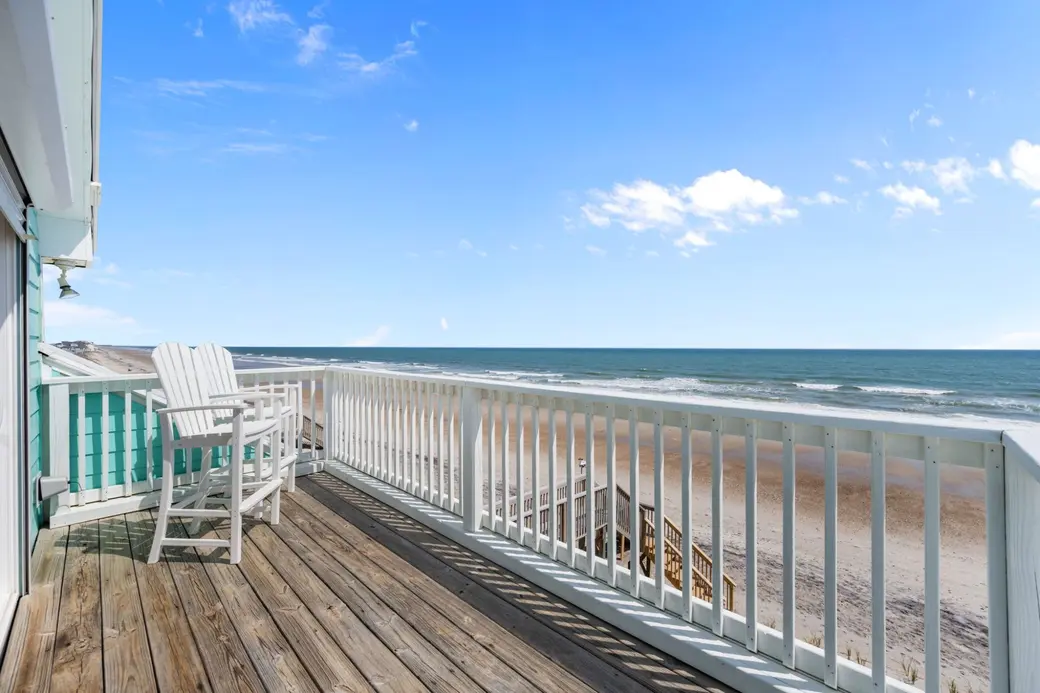
Decks and balconies: Fasteners, brackets, connectors, and other metal components may corrode, potentially affecting their condition and function.
-
Exterior doors and windows: Hinges, locks, handles, and other exposed hardware may show corrosion or wear.
-
Heating and cooling equipment: Outdoor HVAC equipment may experience corrosion or deterioration depending on its materials, location, and exposure.
-
Exterior lighting and fixtures: Metal housings, mounting hardware, and exposed connections may require maintenance or replacement.
-
Roofing and exterior connections: Flashing, fasteners, and other exposed metal components may need closer attention, depending on the home's construction and condition.
Visible rust does not automatically mean a component has failed. Likewise, a component that looks acceptable from the outside may require professional evaluation if its structural integrity or function is in question.
Can Salt-Air Corrosion Lower Your Coastal Home's Value?
Potentially, yes, but salt-air exposure alone does not determine a home's market value.
The effect on a property's value depends on the actual condition of the home, the extent of any deterioration, the cost and scope of needed repairs, and how buyers evaluate the property compared with competing homes.
For example, minor surface rust on an exterior fixture may be a relatively straightforward maintenance item. Significant corrosion affecting a deck connection, railing attachment, or other important component may raise more substantial concerns and warrant further evaluation.
When buyers compare coastal properties, visible maintenance issues can influence their perception of how well a home has been cared for. Questions about potentially damaged components may also arise during inspections or negotiations.
However, there is no universal dollar amount or percentage that should be deducted from a home's value simply because it is located near the ocean.
For sellers in Surf City, Topsail Beach, and North Topsail Beach, pricing should reflect the property's individual characteristics, condition, location, and relevant comparable sales—not an assumed penalty for living in a coastal environment.
What Should Sellers Check Before Listing a Coastal Home?
Before putting a coastal property on the market, consider walking through the home and evaluating areas that receive regular exposure to salt air and moisture.
1. Inspect Visible Metal Components
Look for rust, flaking finishes, loose hardware, staining, or other visible signs of deterioration on railings, stairs, exterior fixtures, deck hardware, and accessible connections.
Pay particular attention to areas that remain damp or receive direct wind and salt spray.
If corrosion appears to affect a load-bearing component, a connection, or another safety-related feature, consult a qualified professional rather than assuming that cleaning or repainting will resolve the problem.
2. Review Exterior Maintenance
Walk around the property and look for peeling paint, deteriorating sealants, damaged finishes, and other maintenance concerns.
Salt-air exposure is only one potential contributor to exterior deterioration. Moisture intrusion, ordinary aging, installation quality, and other environmental conditions may also play a role.
Address routine maintenance where appropriate, and seek professional guidance when the cause or severity of a problem is uncertain.
3. Check Outdoor HVAC Equipment
Look at accessible exterior equipment for obvious signs of corrosion, physical damage, or deteriorating finishes.
If the equipment has not been serviced recently or its condition is uncertain, consider having a qualified HVAC professional evaluate it before listing.
Keep any available service records, repair invoices, and equipment documentation together so you can provide accurate information when questions arise.
4. Evaluate Decks, Balconies, and Exterior Stairs
Outdoor living spaces are important features of many Coastal North Carolina homes. Buyers may pay close attention to their appearance and condition.
Look for deteriorating wood, loose railings, damaged boards, visible corrosion, or other signs that a closer inspection may be needed.
Because corrosion can affect concealed or difficult-to-see connections, do not rely solely on a visual check when there are signs of a potentially significant problem.
5. Gather Maintenance and Repair Records
Documentation can help you explain the property's maintenance history and demonstrate the work that has been completed.
Useful records may include:
-
HVAC maintenance and repair invoices.
-
Deck, railing, or stair repair records.
-
Exterior painting and protective-finish documentation.
-
Receipts for replacement hardware or fixtures.
-
Reports from qualified contractors who evaluated or repaired corrosion-related concerns.
Keep descriptions accurate and distinguish between completed work, routine maintenance, and recommendations that have not yet been addressed.
Should You Repair Salt-Air Damage Before Selling?
That depends on the type of damage, its severity, the likely cost of the work, and the property's overall selling strategy.
Some maintenance items may be relatively inexpensive to address before photography and showings. Cleaning appropriate exterior surfaces, replacing visibly deteriorated fixtures, or completing routine maintenance may help a home present more favorably.
Other issues may require a qualified contractor, HVAC technician, or structural professional. In those cases, understanding the actual condition and recommended scope of work is more useful than making cosmetic improvements that do not address the underlying concern.
Before spending money, consider three questions:
-
Will the work improve the home's condition or address a meaningful concern? Prioritize safety, function, and material deterioration over purely cosmetic changes.
-
Is the proposed repair appropriate for the component and its exposure? Materials and replacement hardware should be suitable for the conditions in which they will be used. A qualified professional can help determine the appropriate approach.
-
How might the work affect the selling strategy? Your agent can help you consider presentation, competing properties, buyer expectations, and the likely relevance of the issue to your target market.
Not every repair will produce a dollar-for-dollar return at resale. The goal is to make informed decisions based on the property rather than automatically undertaking every possible improvement.
Do You Need to Disclose Salt-Air Corrosion When Selling in North Carolina?
Disclosure questions depend on the property's circumstances, the seller's knowledge, the applicable requirements, and the nature of the condition.
North Carolina's Residential Property Disclosure Act, N.C. General Statutes Chapter 47E, addresses residential property disclosure statements for covered transfers. The law provides for disclosure of specified property characteristics and conditions within the statutory framework, including options relating to actual knowledge and no representation. Certain transfers are excluded.
Separately, North Carolina real estate brokers have duties concerning material facts they know or reasonably should know about a property.
For a seller, the practical takeaway is to describe known conditions and completed repairs accurately, avoid misrepresenting the home's condition, and discuss disclosure questions with your real estate professional. If a condition raises a legal question, consult a North Carolina real estate attorney as appropriate.
Do not assume that all surface rust is a material defect, or that repairing a problem automatically eliminates every possible disclosure concern. The specific facts matter.
How Can Coastal Homeowners Reduce Future Salt-Air Corrosion?
Ongoing maintenance can help homeowners monitor exposed components and address deterioration before it becomes more extensive.
Depending on the property and its materials, useful practices may include:
-
Periodically rinsing appropriate exterior surfaces with fresh water to remove accumulated salt, following manufacturer guidance.
-
Inspecting exposed hardware, railings, fixtures, and accessible connections for corrosion.
-
Maintaining exterior coatings, paint, and sealants as appropriate for the materials.
-
Scheduling regular HVAC service and following the equipment manufacturer's maintenance recommendations.
-
Replacing deteriorated components with materials and hardware appropriate for the property's exposure.
-
Keeping records of maintenance, inspections, and repairs.
The right maintenance schedule varies by property. An oceanfront home in North Topsail Beach may experience different exposure from a home farther inland in Holly Ridge or Jacksonville. Even properties in the same community can have different conditions depending on their orientation, sheltering, and proximity to breaking waves.
There is no single maintenance schedule that fits every coastal home, so tailor the approach to the property and the manufacturer's recommendations.
What Does Salt-Air Corrosion Mean for Selling Your Coastal North Carolina Home?
Salt-air corrosion is a maintenance consideration for coastal property owners, but it does not automatically make a home difficult to sell or establish that its value has declined.
The most useful approach is to understand the property's current condition, address significant concerns appropriately, maintain documentation, and establish a pricing strategy grounded in the local market.
For homeowners preparing to sell in Surf City, Topsail Beach, North Topsail Beach, Sneads Ferry, Holly Ridge, or the surrounding Coastal North Carolina area, a property-specific review can help identify which maintenance items deserve attention before the home goes on the market.
Thinking about selling your coastal home? Streamline Realty Team can help you evaluate your property's presentation, consider relevant comparable sales, and develop a listing strategy tailored to your home's location and condition. Contact Streamline Realty Team to discuss your selling goals and the next steps for preparing your property for the market.
Categories
Recent Posts



GET MORE INFORMATION